Both pharmacists and physiotherapists are essential clinical professionals within the NHS.
While their roles differ, their pay scales often overlap — typically falling between Band 6 and Band 8.
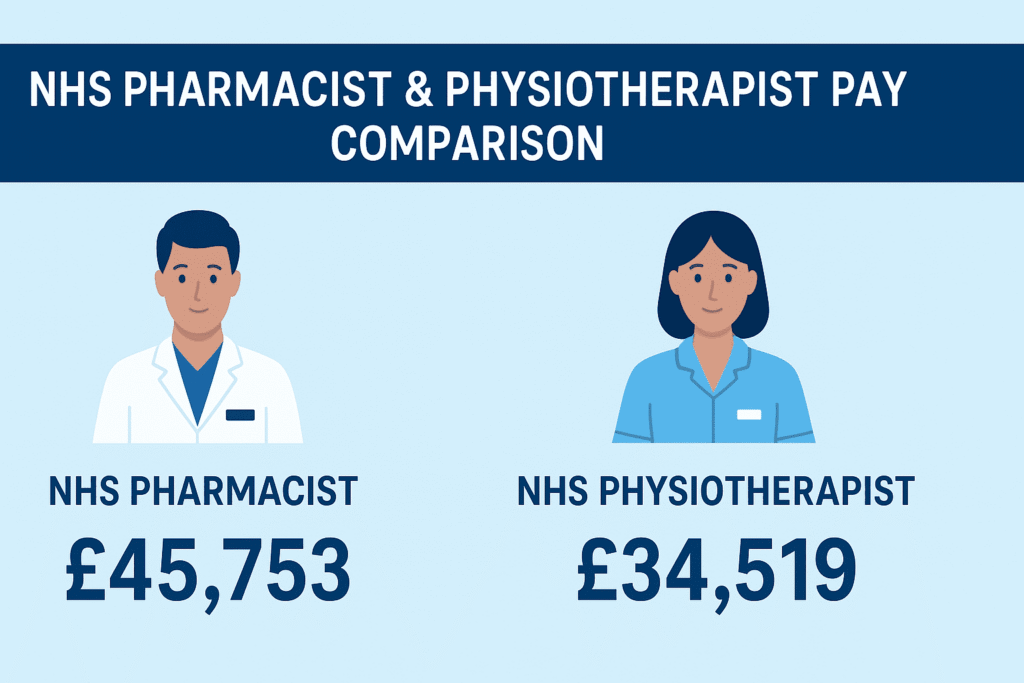
NHS Pharmacist Pay (2026)
| Band | Role | Salary (£) | Net Monthly (£) |
|---|---|---|---|
| Band 6 | Newly Qualified Pharmacist | 35,392 – 42,618 | 2,200 – 2,500 |
| Band 7 | Senior / Clinical Pharmacist | 43,742 – 50,056 | 2,600 – 2,950 |
| Band 8a | Lead / Specialist Pharmacist | 50,952 – 57,349 | 3,000 – 3,400 |
NHS Physiotherapist Pay (2026)
| Band | Role | Salary (£) | Net Monthly (£) |
|---|---|---|---|
| Band 5 | Entry Level Physio | 28,407 – 34,581 | 1,950 – 2,200 |
| Band 6 | Senior Physio | 35,392 – 42,618 | 2,300 – 2,600 |
| Band 7 | Clinical Specialist / Team Lead | 43,742 – 50,056 | 2,800 – 3,000 |
Key Differences
| Factor | Pharmacist | Physiotherapist |
|---|---|---|
| Starting Band | Band 6 | Band 5 |
| Entry Salary | ~£35,000 | ~£28,000 |
| Highest Typical Band | Band 8a | Band 8a |
| London Weighting | Yes | Yes |
| Overtime Pay | Rare | Common (extra shifts) |
Pharmacists generally start higher, while physiotherapists progress faster through bands with specialisation. Professionals comparing contracted hours or additional shifts can use the NHS Wage Calculator to estimate weekly, monthly and annual earnings.
Readers comparing these career paths with nursing can check band-specific earnings through the Nurse Salary Calculator UK.
Example: Band 7 Comparison
| Role | Gross Pay (£) | Pension | Net (£/month) |
|---|---|---|---|
| Pharmacist | 45,000 | −3,600 | ~£2,900 |
| Physiotherapist | 45,000 | −3,600 | ~£2,900 |
Choosing Between NHS Pharmacy and Physiotherapy
Salary is only one part of this career decision. Pharmacists often enter the NHS at a higher band, while physiotherapists may begin at Band 5 and progress through specialist, advanced-practice or leadership roles. Anyone assessing an entry-level physiotherapy position can review the NHS Band 5 Salary Guide for the relevant starting range.
For comparison with a medical career pathway, the NHS Doctor Salary Calculator UK provides a doctor-specific earnings breakdown.
Gross salaries can look similar at senior levels, but pension contributions, tax, contracted hours and regional supplements may produce different net figures. The NHS Take-Home Pay by Band guide provides additional context for comparing these deductions across Agenda for Change levels.
For an estimate based on an individual salary and working pattern, start from the main NHS Salary Calculator. Staff primarily concerned with the amount remaining after deductions can also consult NHS Salary After Tax 2026.
FAQs
Q1: Do NHS pharmacists usually earn more than physiotherapists?
A: Pharmacists commonly enter the NHS at a higher band than newly qualified physiotherapists. However, eventual earnings depend on role, experience, specialisation, location and progression rather than profession alone.
Q2: Can pharmacists and physiotherapists receive the same salary?
A: Yes. Professionals working at the same Agenda for Change band and pay point may have similar basic salaries. Their take-home pay can still differ because of pension choices, tax codes, contracted hours and additional payments.
Q3: Which career has better NHS pay progression?
A: Both careers offer progression into specialist and leadership roles. Pharmacists may have a higher typical starting band, while physiotherapists can progress into advanced clinical, management and consultant-level positions.
Q4: Do London allowances apply to both professions?
A: Eligible NHS pharmacists and physiotherapists working in designated high-cost areas may receive an additional supplement. The amount depends on whether their workplace is in Inner London, Outer London or the Fringe area.
Q5: Does overtime affect pharmacist and physiotherapist take-home pay?
A: Additional hours can increase gross and take-home earnings, but availability and payment terms depend on the role and contract. Physiotherapists may have opportunities involving weekend or additional clinical work, while pharmacy arrangements can vary between employers.